


Does bread make you fat? Myths and truths
Is bread fattening? Bread is one of the most controversial foods when it comes to food and especially when it comes to weight loss goals. You've probably heard phrases like: "If you want to lose weight, cut out bread" or "bread is fattening". But what's the truth in this? Today I want to help you debunk this myth with science-based information. Bread alone is not fattening. Gaining weight or losing weight depends on energy balance: that is, the calories you consume versus the calories you expend in your day. No food, including bread, has the ability to make you fat on its own. What matters is the overall context of your diet and lifestyle. On the other hand, if we talk about "fattening" in terms of kcal per 100g. Bread contains about 250-280 kcal per 100g, which if we compare it with fatty foods (cured cheeses, nuts or olive oil) or ultra-processed foods (potatoes, pastries, sausages), it has almost half the kcal. The problem is not the bread, but the quantities: Eating too much bread can unbalance your daily calorie intake. For example, if you eat bread at all your meals, perhaps you should consider increasing the variety of cereals in your day by including quinoa, rice, tubers such as potato, cassava or sweet potato, pasta or breads made from cereals other than wheat, such as rye, spelt, etc. What you accompany it with: If you spread the bread with butter, cocoa cream or fatty sausages, the calorie intake will be much higher. This will keep you satiated and prevent you from eating more kcal than you need. Is bread inflammatory? This question is increasingly asked by people who have suffered or are suffering from digestive pathology due to an imbalance in the microbiota, chronic stress, food intolerance, damaged mucous membranes or other causes. In these cases, they are right to think that bread can aggravate inflammation. If there is a digestive pathology, bread, especially if it contains gluten, can be problematic, and if there is an intolerance or sensitivity to gluten, the inflammation can be even greater. BUT, if you have a healthy microbiota and your digestion is normal, bread, as part of a balanced diet, is not inflammatory in itself. It is true that today's wheat breads are not like those of yesteryear. Nowadays, highly refined flours are used, which provide fewer nutrients. However, this does not mean that bread is harmful in all contexts. As part of a varied and healthy diet, bread will not make you bloated or raise your blood sugar out of control, especially if you combine it with foods rich in protein, healthy fats and fibre (such as fruit), which slow down its absorption. Is bread bad for your health? This statement sounds alarmist and, above all, it is false. There is insufficient scientific evidence to show that bread has negative effects on health. The problem is not the bread itself, but the context of our diet. We live in a world where our diet is becoming increasingly industrialised, and many people consume bread in excess along with other processed foods high in unhealthy fats. This habit can lead to an increase in the daily calories consumed, which in the long term can lead to obesity and associated diseases. Hence the myth that "bread is bad" or "bread is fattening". But the truth is that it is not the bread that is harmful, but the combination of an unbalanced diet and an unhealthy, sedentary lifestyle. Bread, whether made from wheat or other cereals, is not harmful to health when consumed in moderation and in the context of a balanced diet. However, it is important not to overuse wheat. My advice: vary the grains you eat. Include alternatives such as oats, rye, buckwheat, spelt or maize in your diet. Why? Because consuming too much wheat alone for long periods of time can affect your gut microbiota, which in turn can affect your overall health and weight. In short: Bread is not the enemy. What really matters is: The quality of the bread: Prioritise wholemeal breads in your daily routine for their higher fibre and nutrient content. If it is prior to high-intensity cardiovascular exercise of more than one hour (running, cycling, rowing, etc.), a more refined bread may be a good option for quick energy. Quantity: Consume bread in moderation, adjusting it to your needs and not exceeding your daily calorie intake. If you are unfamiliar with this, consult a nutrition professional for guidance on your needs. The context of your diet: Make sure that bread is part of a balanced and varied diet, accompanied by other healthy foods such as protein, healthy fats and sufficient vegetables. In short, variety and moderation are key. Bread does not have to disappear from your life, as long as there is no associated digestive pathology.
Read More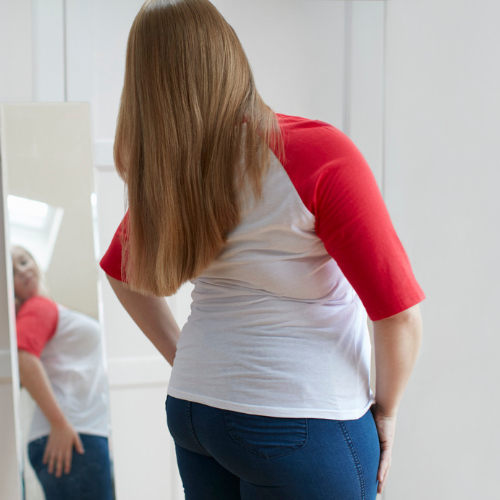
How body image influences fat loss
Have you heard of body image? It’s not just about how we look physically, but also about how we feel about our bodies and how we relate to them. The relationship we develop with our appearance can have a direct impact on our success when it comes to losing fat. When we don’t accept our bodies – that is, when we have negative thoughts about them, such as “I’m so ugly”, “my legs are so big”, “my clothes don’t fit me at all”, “my tummy’s disgusting”… does that sound familiar? – we enter a cycle of frustration and self-criticism. This creates a state of constant stress which, although we may not always notice it, affects our bodies on a physiological level. One of the main effects of stress is the release of cortisol, the stress hormone. When this hormone is present day in, day out in high levels, it has consequences that make it harder for us to lose weight. Effects of cortisol on your weight Increased fat accumulation, especially in the abdominal area: This happens because cortisol promotes fat storage, and as we’re in a constant state of stress, our body tends to accumulate more fat as a survival response. Increased appetite and cravings: In stressful situations, we tend to seek out foods high in sugar and fat, which leads us to consume more calories than our bodies need. This creates a cycle that is difficult to break, as the more we eat out of anxiety, the harder it becomes to achieve our health goals. Reduced sleep quality: Stress also affects our ability to rest properly, which can leave us with less energy and motivation to maintain a healthy lifestyle. Disruption of our gut microbiota: The beneficial bacteria in our gut can be affected by stress, potentially leading to consequences such as a weakened immune system, metabolic changes, increased low-grade inflammation in our body and possible digestive symptoms. Therefore, rejecting our body image not only affects our mental health but also puts our body in a constant state of alert, which makes it harder to lose fat. Strategies for improving your relationship with your body By now you’ll realise that working on accepting your body image as you journey towards a healthier life is essential and necessary for reducing stress and achieving your goals. Although this may seem impossible because you’ve been harbouring these thoughts for some time, believe me, it can be achieved bit by bit. Here are some strategies you can work on: Rethink your relationship with your body: Instead of focusing on the aspects you don’t like, start appreciating what your body does for you every day. For example, your legs allow you to move, your arms allow you to hug, and your hands allow you to carry out activities. Cut down on self-criticism: Try to notice when you start being hard on yourself. When you realise it’s happening, replace those thoughts with kinder or more neutral ones. For example, instead of saying ‘I don’t like my tummy’, you could say ‘I’m working on feeling stronger and healthier’. Disconnect from unrealistic ideals: Social media and the media often promote unrealistic, photoshopped bodies. Limit your exposure to this type of content and focus on following accounts or people who promote a healthier and more diverse view of bodies. Associate exercise with pleasure, not punishment: Instead of exercising to make up for what you’ve eaten, think of it as a way to feel good and look after your body. Find activities you enjoy that don’t make you feel as though you’re ‘paying’ for what you’ve eaten.
Read MoreLatest entries
Sugar or sweetener: which is better?
1 June 2026
Guilt-free chocolate sponge cake
13 April 2026
 English
  Spanish
  French