


Endocrine Disruptors: How They Affect Your Hormones and Gut Microbiota
In my practice, I frequently see symptoms such as persistent tiredness, painful or irregular periods, thyroid problems, difficulty losing weight, infertility, abdominal bloating or mood swings. Often, in addition to stress and diet, there is a silent factor at play: endocrine disruptors. There is growing scientific evidence of their impact, not only on metabolic and hormonal health, but also on the gut microbiota, the disruption of which can exacerbate hormonal imbalance. 1. What are endocrine disruptors? Endocrine disruptors are chemicals with a structure similar to our hormones, capable of interfering with the hormonal system. They can: Mimic hormones (such as oestrogens) Block hormone receptors Alter hormone production or elimination Modify the sensitivity of tissues to hormonal signals The endocrine system regulates key processes such as metabolism, fertility, the menstrual cycle, thyroid function, mood and the stress response. Therefore, disruption to this system can contribute to the development of metabolic, reproductive, immunological and neurological diseases. This is supported by the World Health Organisation (WHO). 2. Where are they found? Bisphenol A (BPA) and microplastics are present in plastic packaging that is particularly exposed to heat, reused or scratched (plastic food containers, plastic bottles and pre-packaged ready meals). Tinned food cans also contain BPA in their inner lining, but nowadays tinned food is much more strictly regulated and many companies have removed it from their cans. Parabens, phthalates, benzophenones, synthetic fragrances and triclosan are found in cosmetics (creams, shampoos, make-up, etc.), personal care products and household cleaning products. Pesticides and herbicides found in conventional farming, particularly in soft fruits, grapes and apples. Perfluorinated compounds (PFOS, PFOA) found in scratched or damaged non-stick frying pans. Mycotoxins: Consuming food contaminated with mould or having damp patches in the home with mould that release mycotoxins into the air. Occasional contact has no effect on our bodies, but constant, cumulative exposure does. 3. What impact does this have on our microbiota? Recent evidence shows that these compounds act as modulators of the gut ecosystem. It has been observed that continued exposure reduces the bacterial diversity of our microbiota and can affect the intestinal barrier by increasing local inflammation (leading to a higher risk of intolerances, infections, and digestive and hormonal disorders). The gut is also an endocrine and detoxifying organ; when its balance is disrupted, so too is hormonal regulation. 4. What can we do? Realising that exposure to these substances can affect us in the long term does not mean becoming obsessed, but rather learning to reduce our exposure gradually and realistically. Start with some of these small changes: Avoid heating food in plastic: use glass containers. Reduce the use of cling film in contact with hot food. Prioritise fresh food and cook more at home: cut down on ultra-processed packaged foods and ready meals. Wash fruit and vegetables thoroughly: use water and scrub them, and peel non-organic fruit and vegetables whenever possible. Use cosmetics labelled as vegan or microplastic-free, and avoid those containing parabens or perfumes in their ingredients. Use stainless steel bottles (filled with tap water or filtered water if the tap water is very hard). Air the house for 5–10 minutes in the morning and evening, and keep mould under control. Do not eat mouldy fruit or food that has gone off. Use natural cleaning products (vinegar, bicarbonate of soda, etc.) or eco-friendly brands such as Natulim, Frosh or Ecover. Below is a brand I work with that produces high-quality, microplastic-free and chemical-free cleaning and home care products. If this is your first purchase, get a 20% discount if you live in Spain or a 10% discount if you live in Germany or France by clicking on the link: ES – 20% discount DE/FR – 10% discount Specialised nutrition service Specialised nutrition service
Read More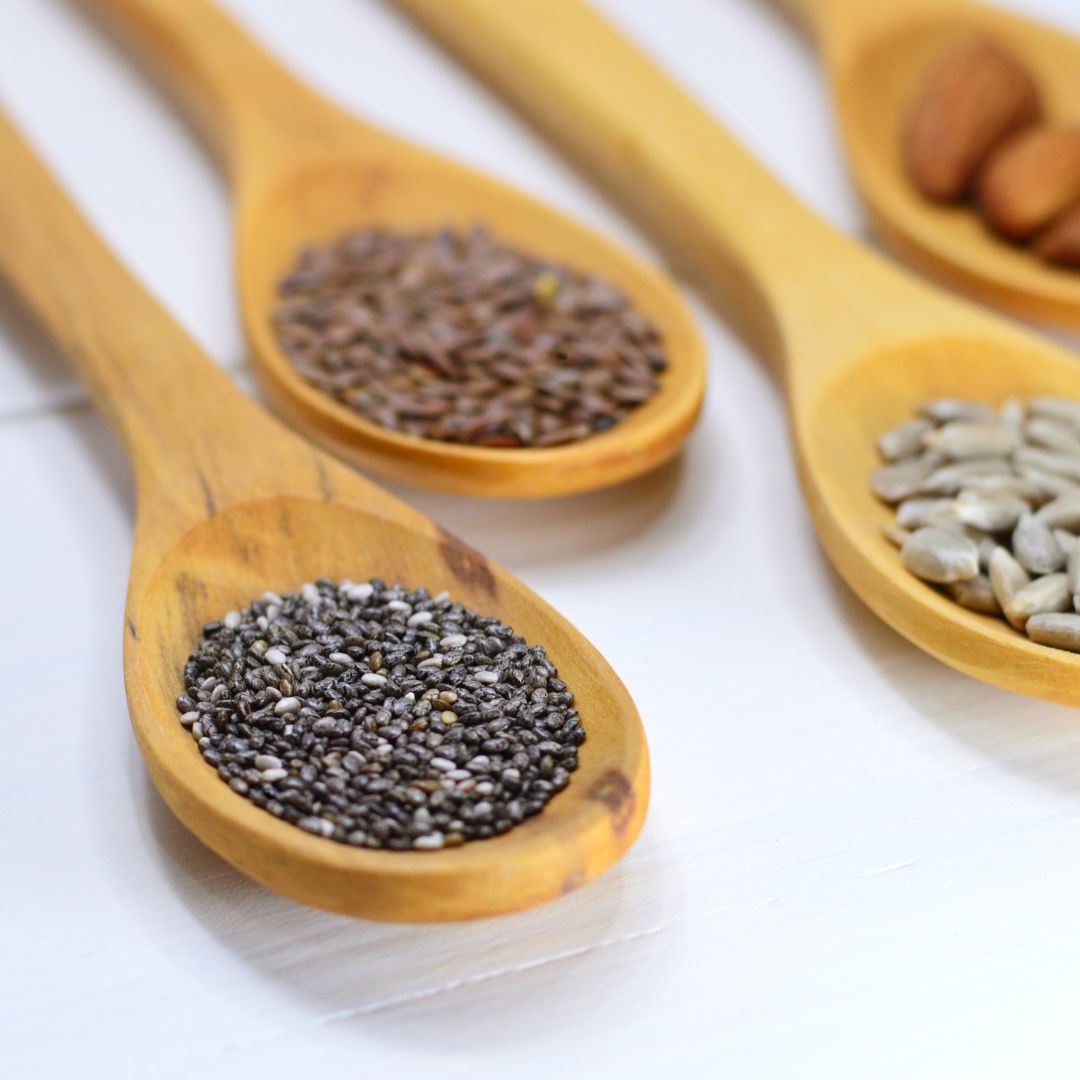
Flax and Chia Seeds: Benefits, How to Take Them, and Their Nutritional Value
Seeds and nuts have formed part of the human diet for thousands of years. Beyond their energy content, they are notable for their high nutritional density and their ability to regulate key bodily functions, such as digestion, metabolism and hormonal balance. Chia seeds (Salvia hispanica) and flax or linseed (Linum usitatissimum) are a clear example of how a small food can help us meet our nutritional requirements easily, whilst offering additional physiological benefits. 1. Their composition: More than just fibre A1. Nutritional profile: Chia seeds High total fibre content (≈34 g/100 g) Rich in soluble fibre, which is responsible for their gelling properties Plant-based source of omega-3 (ALA) Significant amounts of calcium, magnesium, phosphorus, iron and zinc Polyphenols with antioxidant properties A2. Nutritional profile: Linseeds One of the richest dietary sources of omega-3 (ALA) Soluble and insoluble fibre in a balanced ratio Lignans, phytochemicals with hormone-modulating activity B-group vitamins and minerals such as magnesium and potassium B. Fibre, microbiota and gut health: the central axis The main nutritional benefit of chia and flax lies in their fibre, particularly the soluble fibre. This fibre acts as a fermentable substrate for the gut microbiota, promoting the production of short-chain fatty acids (SCFAs), such as butyrate, which has anti-inflammatory effects. SCFAs contribute to the integrity of the intestinal barrier, regulate inflammation and play a role in glucose and lipid metabolism. C. Mucilages: regulators of intestinal transit and gastric protectors. Both chia and flax contain mucilages, a type of soluble fibre capable of absorbing water and forming a viscous gel. This gel fulfils several important physiological functions: In the gut It increases faecal volume and improves bowel movement. It softens stools, facilitating bowel movements. It slows down the absorption of glucose and fats. It contributes to a greater feeling of fullness. At the level of the digestive mucosa: When the seeds are consumed after being thoroughly soaked, particularly chia seeds, their mucilage forms a stable, pudding-like gel (unlike linseed, which forms an unstable gel) and exerts an emollient and protective effect on the digestive mucosa: They coat the gastric and intestinal mucosa. They reduce digestive irritation. They promote epithelial regeneration. They act as a natural gastric protector in mild conditions. This effect is particularly beneficial in cases of: mild gastritis or functional dyspepsia; occasional heartburn or acid reflux; low-grade digestive inflammation; and irritable bowel syndrome with constipation. D. Lignans and hormonal balance Flax is rich in lignans, compounds that are broken down by bacteria in our colon into metabolites called enterodiol and enterolactone, which have a structure similar to oestrogen but with a much weaker effect. For this reason, it can modulate oestrogenic activity by binding to oestrogen receptors and exerting an effect that is weaker than that of oestrogen. This could help to reduce the effects of excess oestrogen in the blood, a factor associated with the development of endometriosis, uterine fibroids, polycystic ovary syndrome and premenstrual syndrome. Although studies in women are limited, in vitro and animal model evidence suggests that it may exert modulatory effects on oestrogen metabolism, improving fertility and reducing associated symptoms. Furthermore, during the menopause there is a marked drop in oestrogen and progesterone levels, leading to the typical symptoms of this stage, such as hot flushes, mood swings and changes in quality of life. In this context, flax may be helpful as it partially activates oestrogen receptors, helping to alleviate some symptoms of the menopause. In fact, clinical trials in peri- and post-menopausal women have found that regular consumption of flax or lignan-rich products (10g/day) is associated with a reduction in the severity of menopausal symptoms and an improvement in quality of life, although the results are not entirely consistent across studies and the effect is clearly more modest than that of hormone replacement therapy, but without side effects. The fact that the gut microbiota is required to convert these compounds into beneficial ones reinforces the idea that the effect of these seeds depends not only on the food itself, but also on the state of each person’s gut microbiota. 2. How should they be prepared to maximise their benefits? The method of consumption is crucial for these seeds to be truly beneficial from a nutritional and physiological perspective. Whole seeds cannot be broken down by our digestive enzymes, and although they subsequently absorb water in the gut, there is not enough time for them to soften sufficiently to allow their compounds and nutrients to be extracted to the full. For this reason, it is important either to soak them beforehand or to grind them and ensure they are properly hydrated. Ground: better bioavailability of omega-3 and lignans. Do not consume them dry without adding a source of hydration afterwards (at least one glass of water). If they do not absorb enough water, they can cause digestive problems and constipation (forming a blockage). Consuming them ground and rehydrated is particularly helpful in cases of loose stools or diarrhoea. Rehydrated whole or ground: ideal for utilising their mucilage and obtaining a protective effect on the digestive system. Chia seeds should be soaked in three times their volume of water, and flax seeds in twice their volume. Soaked or ground seeds can be added to recipes such as cakes, porridge, biscuits or snacks, or simply mixed into yoghurt with fruit. 3. How should they be stored? Whole seeds: Whole seeds can be stored in an airtight container (ideally glass) in the cupboard for a long time – a year or even longer. Ground seeds: It is important to bear in mind that ground seeds come into contact with oxygen, light and heat, and some sensitive components, such as omega-3, degrade much more quickly, as do other compounds such as lignans. For this reason, it is important to store ground seeds in an airtight container in the fridge for 3–4
Read MoreLatest entries
Sugar or sweetener: which is better?
1 June 2026
Guilt-free chocolate sponge cake
13 April 2026
 English
  Spanish
  French